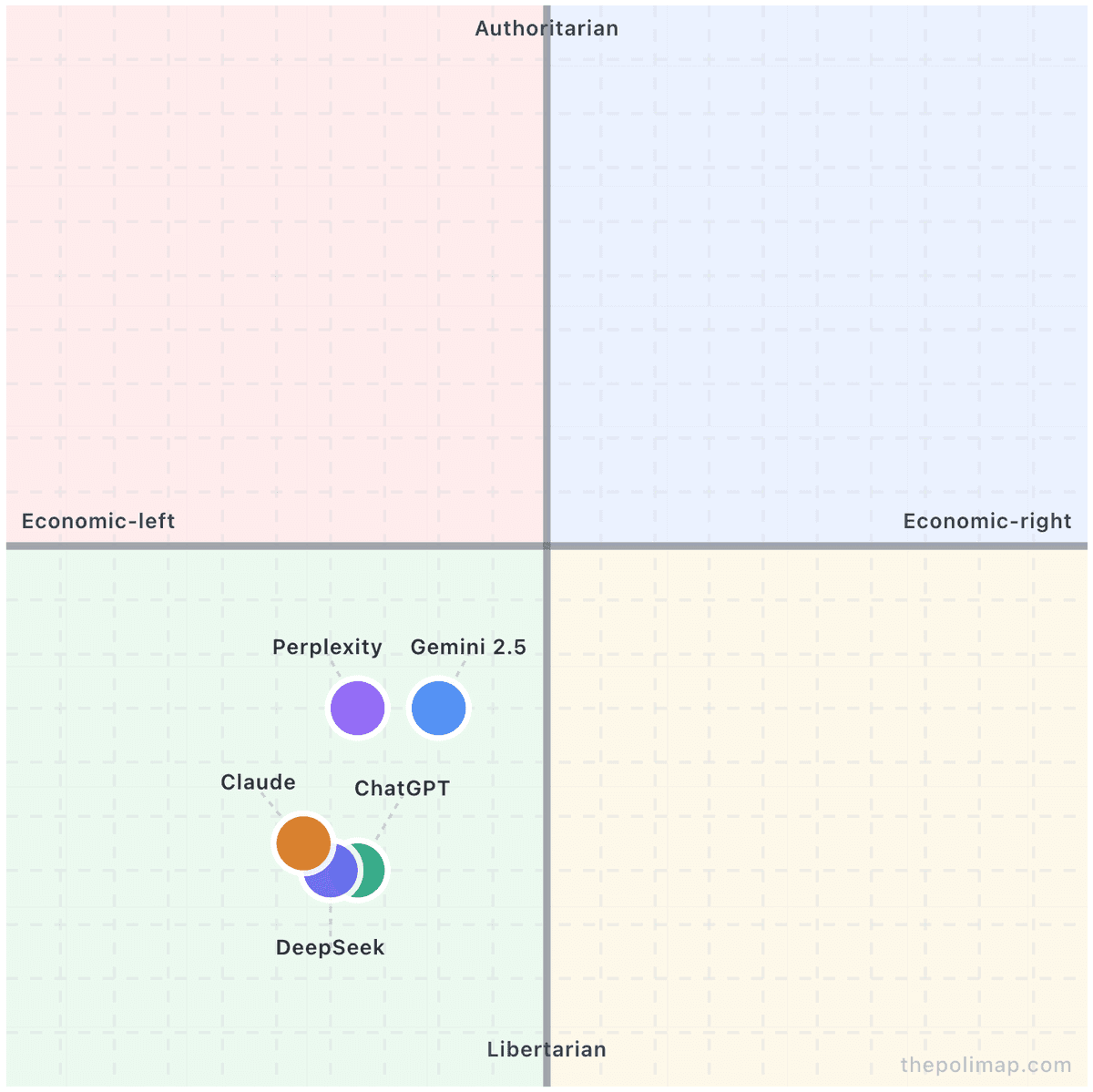
A political spectrum test and a political compass test may sound interchangeable, but they answer different questions. The classic spectrum uses one line from Left to Right. A compass-style model adds a second axis for social power and personal freedom, producing a clearer 2D map of your views.
The one-axis model: fast but limited
One-axis tests are useful for quick orientation. They usually capture your economic priorities, then place you from Left to Right. The tradeoff is compression: people with very different social values can receive nearly identical scores.
The two-axis model: more diagnostic
A 2D political ideology test separates two dimensions:
- Economic axis: market freedom vs redistribution and intervention.
- Social axis: authoritarian control vs personal liberty.
That decoupling is why compass-style tests often feel more accurate, especially when your social and economic instincts don't align with party stereotypes.
Mid-article checkpoint
If you want a coordinate-based result instead of a single label, try our political spectrum test and compare your score across both axes.
Take the political spectrum testWhen to use each test type
- Use a one-axis test for quick content, lightweight segmentation, or broad framing.
- Use a political compass test for deeper self-placement and comparative analysis.
- Use 2D results when discussing ideology, policy tradeoffs, or coalition dynamics.
FAQ
Is a political compass test always better?
Not always. For quick orientation, one-axis tests are fine. For nuanced classification, two-axis tests usually provide a better signal.
Why do some people score near the center on one-axis tests?
Contrasting social and economic preferences can cancel each other out on a single line, even when views are strong.
How should I interpret a 2D score?
Read each axis independently, then evaluate the combined quadrant. The pair tells a fuller political story than one number alone.
Next steps
For scoring details and assumptions, review the methodology behind the model and then run your test.